Google Reviews4.9 ★ · 180+ reviews
Bird management
Bird Control Sydney
We map where birds roost, install humane deterrents, and proof the gaps they keep coming back to.
Inspection-led serviceMatched treatment for this pest and property type
Before you book
What to expect
Humane deterrents and proofing, matched to the building and the species.
- We find every roostWe walk the building and note where birds land, nest, and leave droppings. Different spots need different deterrents.
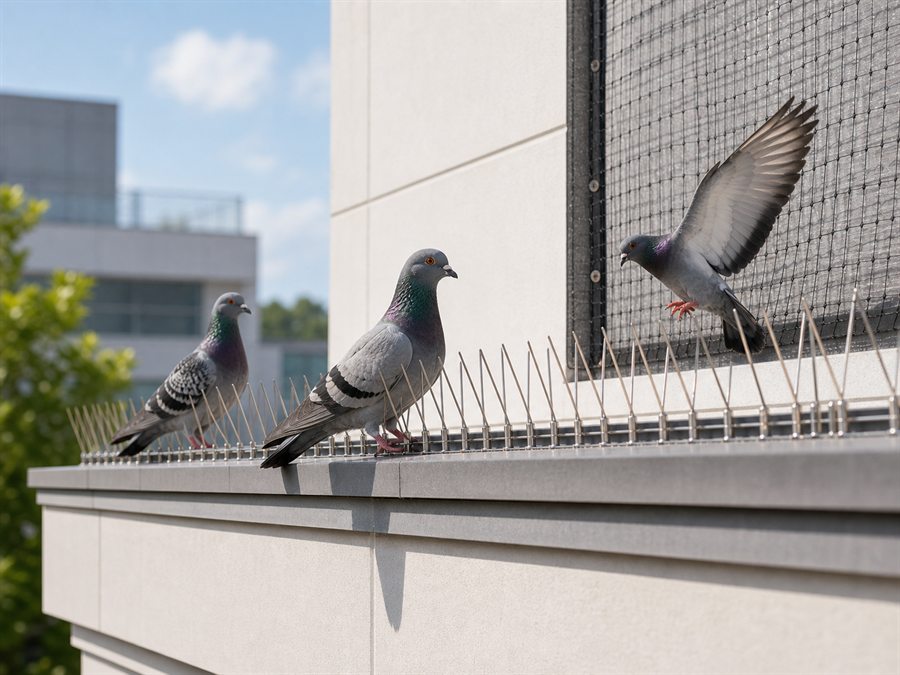
- We choose the right deterrentSpikes suit narrow ledges. Netting covers larger openings. Wire systems work on beams and signs. We match the method to the spot.
- We proof and installPlastic owls and noise devices rarely work for long. Birds get used to them within days. Physical barriers are what actually hold.
- We guide cleanup and follow-upDroppings need safe removal before proofing sticks properly. We tell you what to clean, what to avoid, and when to check the install.
Trustpilot4.8 ★ · Service rating
Facebook5.0 ★ · Recommendations
Google Reviews5.0 homeowner review
★★★★★
“The technician explained exactly where the issue was coming from, treated it cleanly, and gave us a prevention plan we could actually follow.”
We map every roostLedges, gutters, solar panels, signs, roof voids, and loading docks.
About bird problems
Why birds keep coming back
Pigeons, mynas, and starlings return to the same ledge because it is sheltered, flat, and close to food. Droppings build up fast. They are acidic enough to damage paint, block gutters, and make walkways slippery. Scaring them off for a day does not work. They need a physical reason not to land. That means spikes, netting, or wire on the spots they favour. Sydney's older terraces and warehouse conversions have more ledges and parapets than newer builds. That makes bird pressure common across the inner west and industrial suburbs.
Roosting ledgesParapets, awnings, signs, and window sills where birds sit daily.
Nesting cornersProtected gaps in gutters, roof voids, and behind solar panels.
Dropping buildupWhite staining, blocked drains, and slip hazards on walkways below.
Identification
Signs of bird problems
You usually notice the mess before you see the flock. Check for these four.
Fresh droppings are wet and white. Older staining looks chalky and does not wash off easily.
Twigs, feathers, and debris packed into corners or behind solar panel edges.
A ledge with birds every morning is a roost, not a random visit. That is the spot to proof.
Droppings on paths, loading docks, and entrance areas are a safety issue, not just a nuisance.
Prevention
How to discourage birds
None of this needs a technician. Birds stay where landing is easy and food is nearby.
- Birds return to the same ledge every day
- Food scraps nearby keep flocks coming back
- Physical barriers outlast scare devices
- Clean droppings before installing deterrents
Not sure what you need? Call 1300 160 325 and we will talk you through it.
Secure bin lids
Open bins and food waste attract pigeons and mynas from blocks away.
Clear outdoor dining scraps
Cafes and food courts with leftover crumbs on the ground feed the local flock.
Remove standing water
Bird baths, blocked gutters, and puddles give birds a reason to stay close.
Brush ledges regularly
Birds prefer ledges with existing droppings. Cleaning removes the scent marker they follow.
Do not feed birds
Feeding pigeons in one spot trains the whole flock to expect food at your building.
Block gutter access
Mesh or guards over open gutters stop birds nesting where you cannot see them.
What we do
How bird problems are managed
Humane deterrents and proofing, matched to the building and the species.
We find every roost
We walk the building and note where birds land, nest, and leave droppings. Different spots need different deterrents.
We choose the right deterrent
Spikes suit narrow ledges. Netting covers larger openings. Wire systems work on beams and signs. We match the method to the spot.
We proof and install
Plastic owls and noise devices rarely work for long. Birds get used to them within days. Physical barriers are what actually hold.
We guide cleanup and follow-up
Droppings need safe removal before proofing sticks properly. We tell you what to clean, what to avoid, and when to check the install.
Who needs this
Who we help with birds
Bird pressure hits buildings with ledges, food nearby, and sheltered roosting spots.
- Older buildings have more ledges and parapets
- Food businesses attract flocks from the street
- Warehouses and loading docks see heavy dropping buildup
Not listed here? We assess bird problems on any Sydney building. Call 1300 160 325.
Homes and townhouses
Terraces and older homes where pigeons roost on window sills, awnings, and solar panels.
Strata and apartment blocks
Common-area ledges, entrance canopies, and car park roosting that affects every resident.
Shops and retail precincts
Signage, awnings, and entrance areas where droppings put customers off.
Warehouses and loading docks
High ledges, roller doors, and dock areas where bird flocks create hygiene and slip risks.
Is bird control humane?
Yes. We use spikes, netting, wire systems, and physical proofing that stop birds landing without harming them. No poisons, traps, or devices that injure birds. The goal is to make the ledge unusable, not to hurt the animal.
How much does bird proofing cost?
It depends on how many ledges need covering and how high they are. A single window sill is a different job to a full warehouse parapet. We assess the site first and give you a clear quote before any work starts.
Will birds just move to another ledge?
They might, which is why we map the whole building, not just the worst spot. Proofing every favoured roost in one go stops birds shifting one metre along the same wall.
Can you remove bird droppings?
We advise on safe cleanup and can recommend specialist cleaning for heavy buildup. Droppings should be dampened before removal to avoid dust. Heavy contamination on walkways may need professional cleaning before deterrents are installed.
Do plastic owls work?
For a few days, sometimes. Birds quickly learn they are not a threat. Physical barriers like spikes and netting are the only deterrents that hold long term on commercial and residential buildings.
What birds cause the most problems in Sydney?
Feral pigeons are the most common on ledges and awnings. Indian mynas nest in roof voids and gutters. Starlings flock around food sources and outdoor dining areas, especially in suburban shopping strips.
Can birds damage solar panels?
Yes. Nesting debris under and around panels blocks airflow, and droppings reduce efficiency. Netting around panel edges is the usual fix without damaging the install.
How long does bird proofing last?
Quality stainless spikes and netting last many years with minimal maintenance. We check fixings during any follow-up visit and advise if a ledge needs extending.
Do I need council approval for bird netting?
Most residential and commercial deterrent installs do not need approval. Heritage-listed buildings may have restrictions. We flag anything that needs a check before work starts.
Know your pest
Bird profile
The detail behind the advice above, for anyone who wants it.
AppearanceFeral pigeons are 300 to 350mm long with grey-blue plumage. Indian mynas are smaller at about 260mm, dark brown with a yellow beak. Starlings are compact at 200mm with speckled dark feathers.
LifestylePigeons roost overnight on the same ledge and return throughout the day. Mynas and starlings are more active at dawn and dusk, often nesting in roof voids and gutter corners.
HabitsBirds choose flat, sheltered ledges within flying distance of food scraps, bins, and outdoor dining areas. Once a spot works, the flock grows.
Why they matterDroppings corrode building materials, block drainage, and create slip hazards. Nesting debris in roof voids can attract other pests and block ventilation.
Right now
Birds roosting on your building? Do this
Three things that help before we arrive.
Photograph the roosting spots
Pictures of where birds land and nest help us plan deterrents before the site visit.
Do not disturb active nests
Some native birds are protected. Note the location and let us identify the species first.
Keep people away from droppings
Bird droppings can carry disease. Avoid dry sweeping, which sends dust into the air. Damp down before cleaning.
Request service
Get a HIFI Pest Control quote.
Tell us what you are seeing and a specialist will help match the right inspection or treatment plan.
98 Poulton Terrace, Campbelltown NSW 2560
Related services
Explore more HIFI services.
HIFI covers the full range of Sydney pest management — from one-off treatments to ongoing protection programs.